

Our client, a global leader in automotive technology, was expanding their product portfolio across multiple initiatives. While Agile Scrum remained effective at the team level, coordinating delivery across teams became increasingly complex as the organization scaled. Inconsistent estimation, unmanaged dependencies, and limited visibility into delivery timelines were affecting predictability and stakeholder confidence.
We partnered with our client to guide the adoption of SAFe 6.0 to enable enterprise-level alignment and predictable delivery while preserving the agility that had made Scrum successful at the team level.
This article explores how we supported the transition from team-level agility to enterprise-scale delivery, driving alignment, predictability, and measurable business outcomes across a rapidly growing automotive technology portfolio.
What’s in this article:
- Why team-level Scrum struggles as organizations scale
- How we implemented SAFe 6.0 and restructured teams for enterprise alignment
- How we drove predictable outcomes using PI Planning, ART, and value-based metrics
Navigating the Scaling Challenge
Our client managed multiple Scrum teams supported by a legacy task management system that struggled to keep pace with growth. Developers were frequently reassigned across products, resulting in fragmentation, context switching, and elevated delivery risk.
We worked closely with 35 team members to scale delivery while maintaining Agile principles. Teams transitioned from rigid, time-based planning to an outcome-driven delivery model that balanced team autonomy with cross-team alignment, reducing friction and improving predictability.
Implementing SAFe 6.0
As the scale increased, the limitations of team-level Scrum became more pronounced. Coordinating multiple teams, managing dependencies, and providing portfolio-level visibility required a more structured approach.
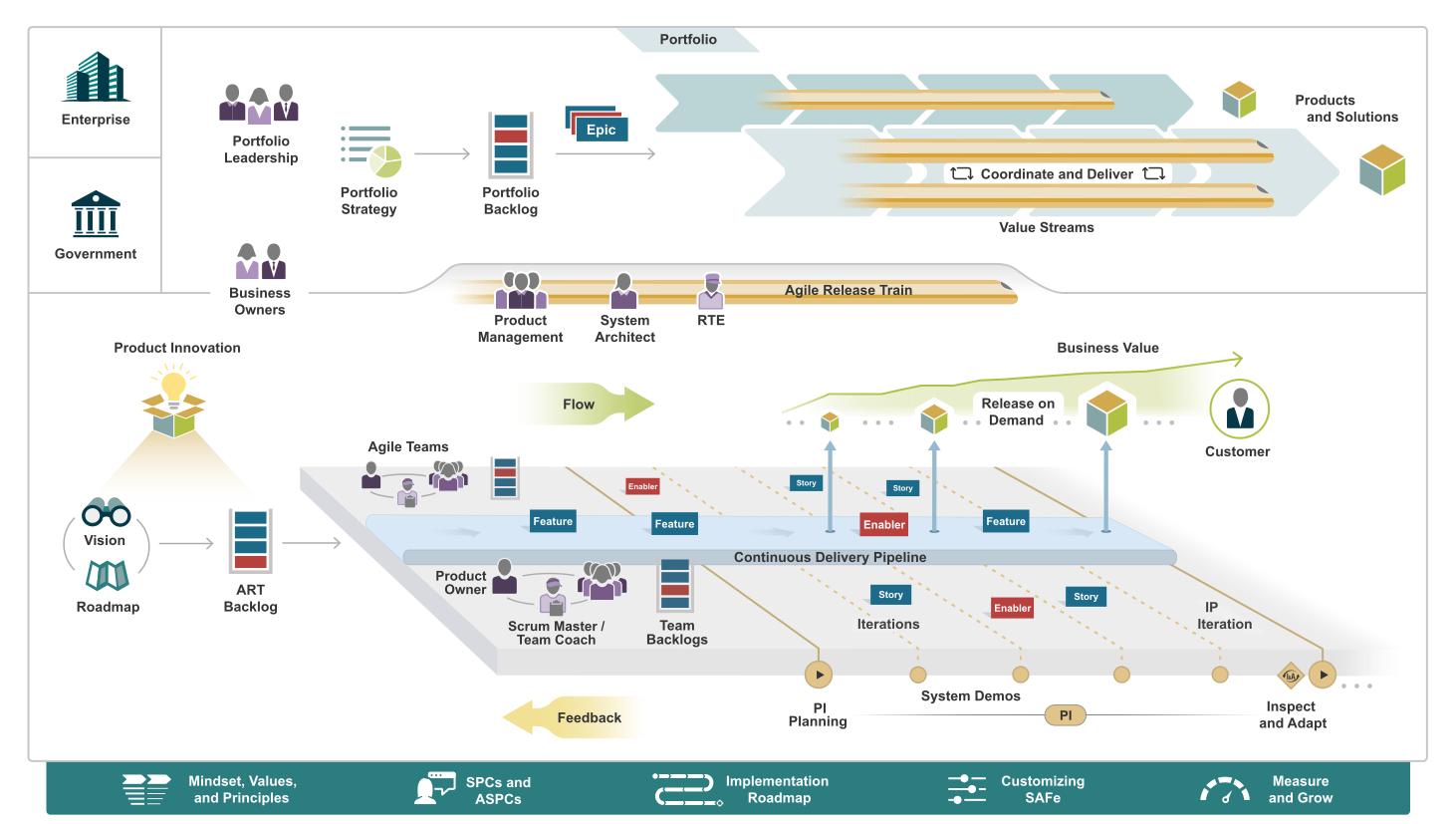
We guided a phased SAFe 6.0 adoption, addressing both organizational structure and team behavior. Our focus was on introducing the right practices at the right time, supported by targeted education, hands-on coaching, and continuous feedback loops.
This approach enabled enterprise-wide planning and dependency management while maintaining flexibility at the team level.
Restructuring Teams for High Performance
To support delivery at scale, we helped reorganize teams into fully dedicated, cross-functional units of 5–8 members, each capable of delivering features end-to-end.
Dedicated product owners, scrum masters, and multidisciplinary developers significantly reduced competing priorities and improved delivery efficiency. This structure eliminated delivery bottlenecks and created clear ownership across teams.
Building Stronger Agile Foundations
Rather than treating SAFe as a theoretical framework, we focused on turning principles into practical, repeatable habits:
- Aligning Work to Business Outcomes: Teams mapped work items to objectives through PI planning and backlog refinement, creating clarity on the value of each contribution.
- Managing Risks Proactively: Risk ROAMing sessions identified blockers early, with clear ownership and mitigation strategies.
- Improving Estimation Practices: Time-based estimates were replaced with complexity-driven story points, accounting for dependencies, validation cycles, and risk. Teams could decline work outside the PI, fostering trust and achievable commitments.
- Onboarding Team Members Effectively: Every new member completed a SAFe 6.0 onboarding program with role clarity and hands-on Jira/Agile Hive training.
- Optimizing Ceremonies: Strict timeboxing kept meetings focused, efficient, and aligned with Agile principles.
Story points are a measure of the total size of a story. They are a combination of complexity, effort, and risk.
Mike Cohn
Operationalizing the Agile Release Train (ART)
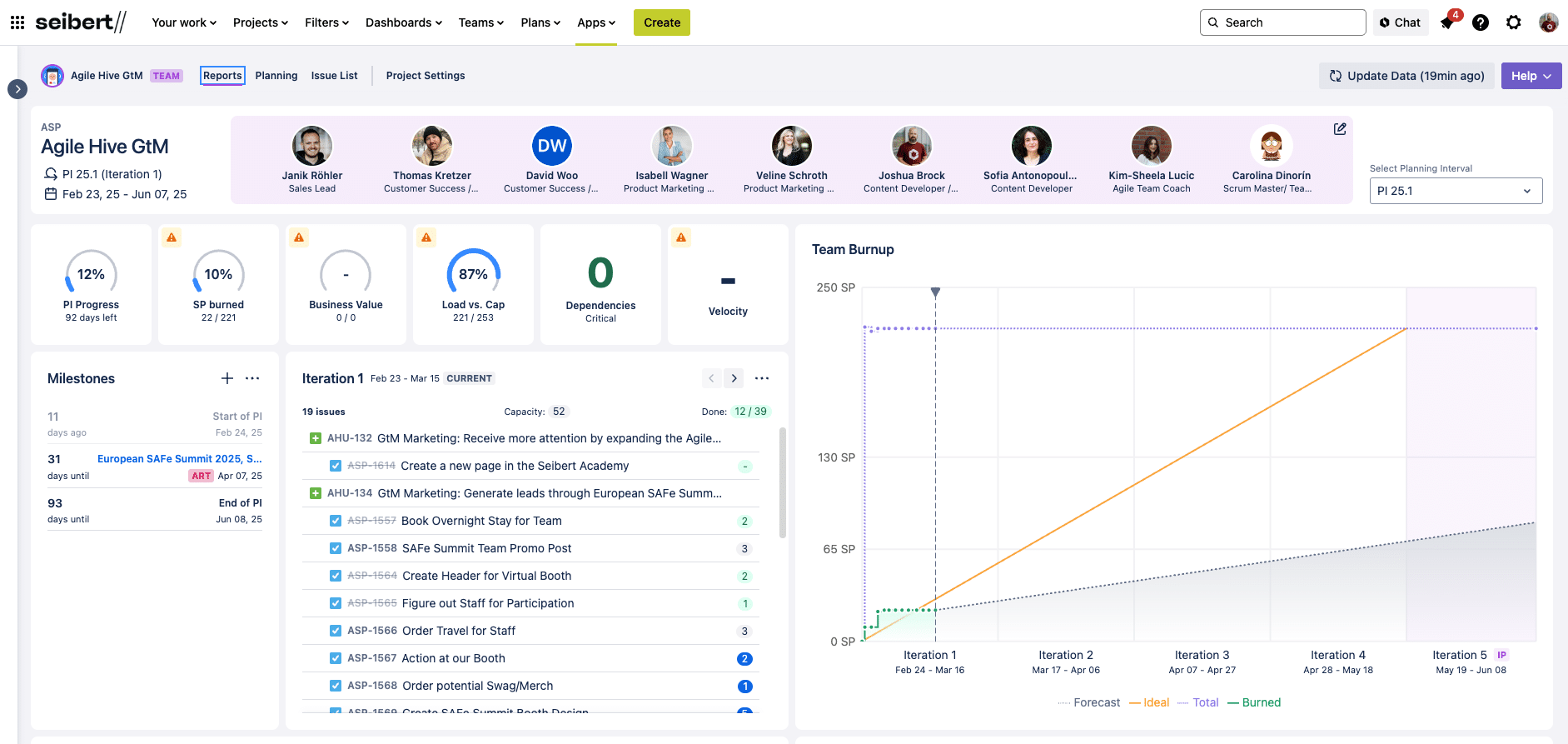
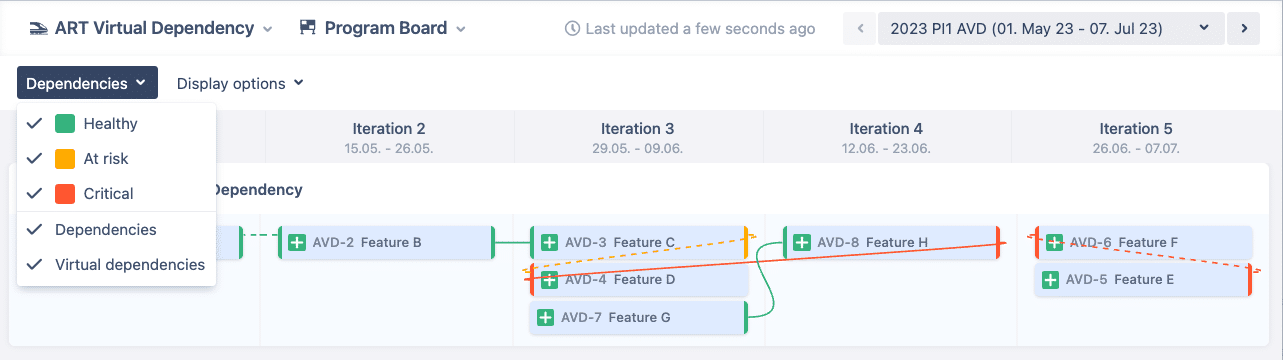
After three PIs (~1 year), we assessed team maturity and implemented ART—long-lived, cross-functional teams that plan, commit, and deliver value together. Using Agile Hive, dependencies were tracked across the ART, linking Jira Epics, PI Objectives, and Risks.
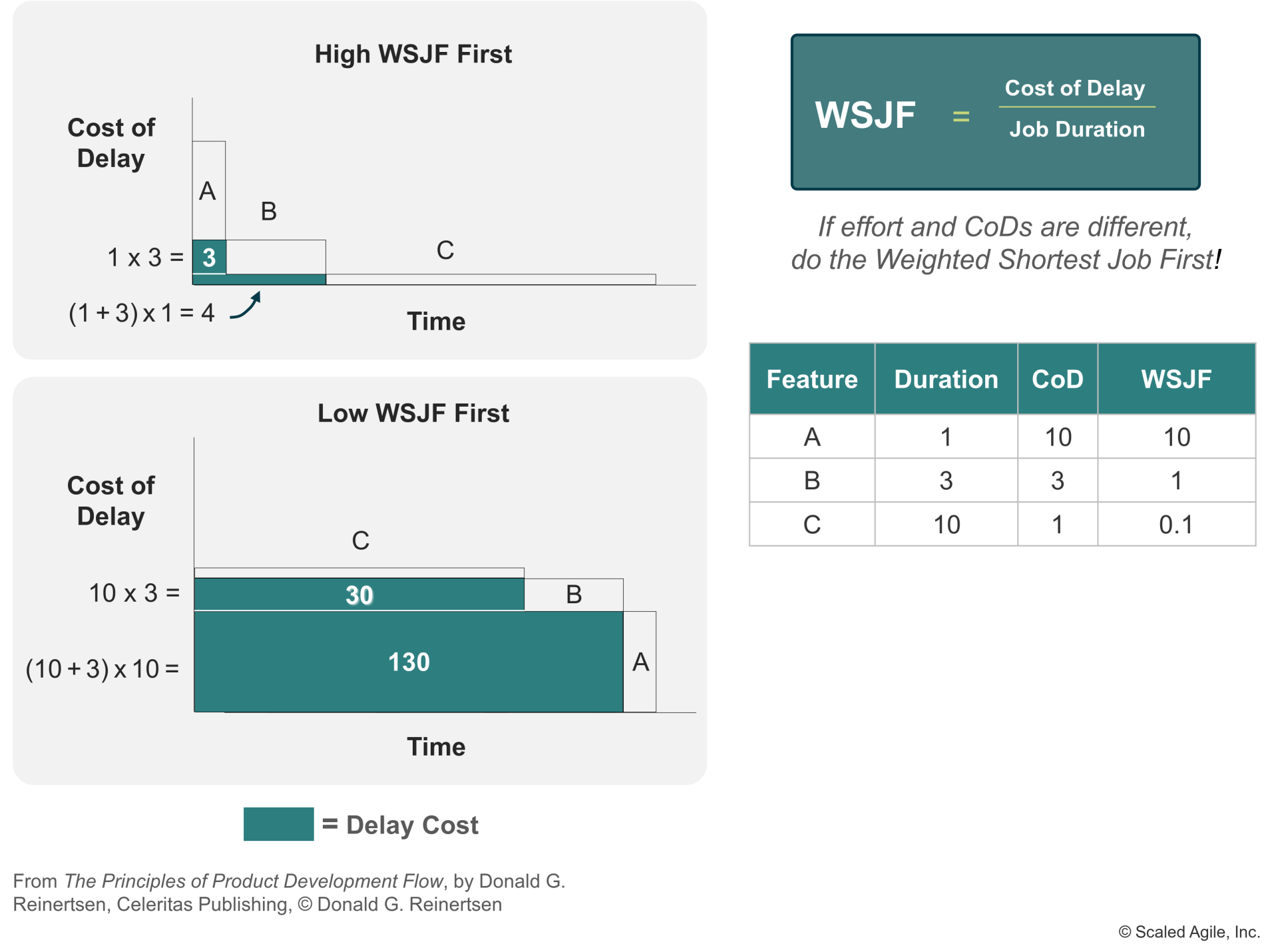
During Pre-PI Planning, Weighted Shortest Job First (WSJF) was applied to rank initiatives by business value, time criticality, risk reduction, and size, ensuring the teams focused on the highest-impact work.
- Committed Objectives reflected goals that teams were confident they could deliver based on verified capacity and known dependencies
- Uncommitted Objectives captured additional high-priority work without risking overcommitment.
This approach brought clarity, alignment, and predictability across multiple teams and initiatives.

Establishing a Predictable Delivery Rhythm
As delivery maturity improved, we helped shift the organization’s focus from tracking velocity to measuring value delivered, supported by a steady and predictable cadence.
Success measurement was redefined through a structured process for rating PI objectives:
- During PI Planning, business owners collaborated with teams to assign Planned Business Value, creating early alignment on priorities.
- At the end of the PI, Actual Business Value was assessed during the System Demo, generating a transparent Program Predictability Measure and reinforcing stakeholder confidence.
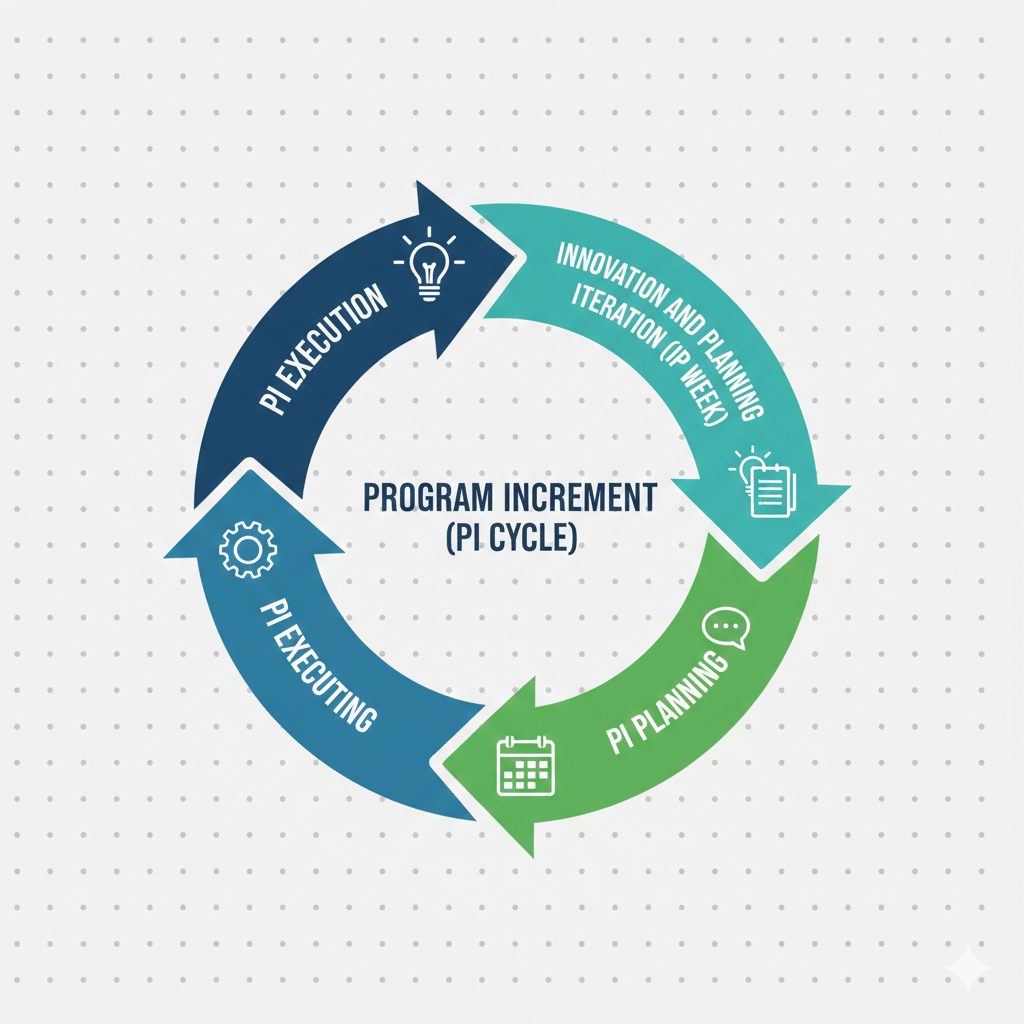
Each PI followed a disciplined rhythm:
- PI Planning (2 days): Alignment on priorities, objectives, and business value
- Execution (4 iterations): Focused development, dependency management, and progress tracking
- Innovation and Planning (IP) Iteration (2 weeks): Inspect & Adapt, innovation, and preparation for the next PI
Regular syncs and retrospectives reinforced alignment, surfaced systemic issues, and supported continuous improvement. The retrospective converts problems into solutions, ensuring it remains a highly valued event within the cycle.
Outcomes and Capabilities
The impact extended beyond tools and processes, resulting in measurable business outcomes:
- Stronger Alignment: Teams moved from siloed backlogs to unified PI objectives, significantly reducing rework and cross-functional friction.
- Sustainable Productivity: Dedicated roles and balanced team structures eliminated hero culture, enabling consistent performance and focused delivery.
- Predictable Delivery: Standardized PI cadence and WSJF-based prioritization improved predictability, allowing stakeholders to plan with confidence.
- Increased Team Ownership: Teams became proficient in Jira and Agile Hive, independently managing dependencies, risks, and outcomes.
- Greater Stakeholder Trust: Regular system demos increased transparency, transforming stakeholders into active partners in delivery.
Closing Thoughts
The transition from Scrum to SAFe established a culture of ownership, transparency, and continuous improvement. Clear accountability, measurable business outcomes, and enterprise-wide visibility now enable the organization to scale innovation sustainably, accelerate time-to-market, and deliver consistent value in a competitive automotive technology landscape.
Through structured guidance, hands-on coaching, and practical implementation of SAFe principles, we helped the organization transform both its processes and mindset, ensuring teams are empowered, aligned, and capable of driving enterprise-level agility with confidence.
